
WELCOME BONUS 300%
UP TO €2000 + 100
FREE SPINS
UP TO €2000 + 100
FREE SPINS
Home → Blackjack
Blackjack at Level UP Casino: Variants, Rules and Payouts
What a Natural Blackjack Actually Pays
A natural blackjack under the Liberal Vegas Strip rules pays 3:2, so a €100 stake returns €150 in winnings before the original bet is returned. The RTP for this rule set sits at 99.72%, with a house edge of just 0.28%. That is the most player-friendly figure among the blackjack variants listed, and the standard deviation of 1.15 is comparatively low for a table game.
The practical difference becomes clear when the same hand is paid at 6:5. On a €10 bet, that blackjack pays €12 instead of €15, and the house edge jumps from 0.28% to 1.85%. The RTP drops to 98.15%, which means the casino keeps an extra 1.39 percentage points. That single rule change costs more than any other modification in the list.
For a single deck with classic rules and a 3:2 payout, the RTP reaches 99.85% and the house edge falls to 0.15%. That is the highest return available in the comparison, but it is often offset by the 6:5 payout. A player who accepts 6:5 on that same single deck would sacrifice the advantage that fewer decks normally provide.
The Shoe, the Cut Card and 75% Penetration
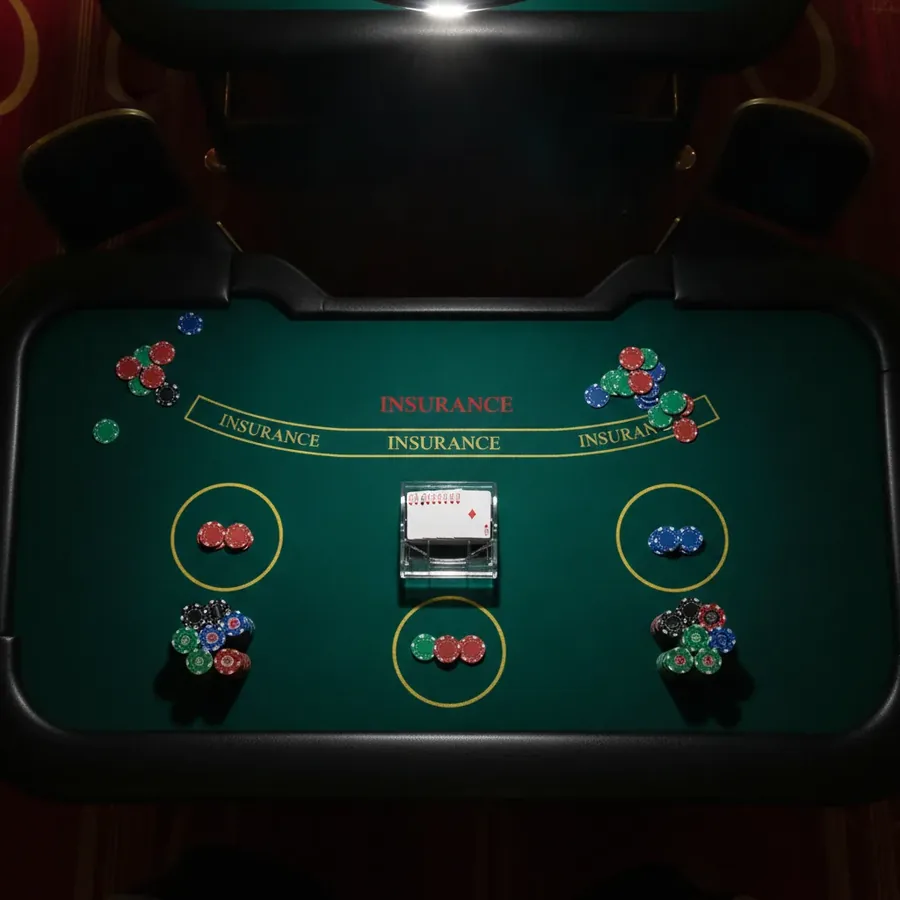
The shoe-based games in the list use six or eight decks, and the rule effects show that moving from eight decks to six improves RTP by about 0.02 percentage points. The cut card determines where the dealer stops dealing, and 75 percent penetration means roughly three-quarters of the shoe is played before a reshuffle. That leaves the remaining quarter unplayed in each shoe.
Deeper penetration matters because the player sees more cards before the shoe ends. The Blackjack Liberal Vegas Strip variant with its 0.28% house edge assumes a full rule set, while the six-deck S17, DAS, DOA game carries a 0.46% edge. The gap of 0.18 percentage points includes the effect of surrender, which the six-deck game lacks.
A 6:5 payout game with six decks shows a house edge of 1.85%, and the shoe size alone cannot compensate for that. Even the 0.02 percentage point gain from using six decks instead of eight is trivial next to the 1.39 percentage point penalty from 6:5. The cut card position and penetration therefore do nothing to offset a poor payout rule.
What the Peek Means When the Dealer Shows an Ace
Peek refers to the dealer checking the hole card for blackjack when the upcard is an ace. Late surrender in the Liberal Vegas Strip rules is available only after the dealer has performed this check. The rule improves RTP by about 0.08 percentage points, and the player loses half the stake when surrendering after no dealer blackjack appears.
The insurance side bet is offered in the same situation, when the dealer shows an ace. Insurance pays 2:1, but the RTP is just 92.53% and the house edge is 7.47%. Basic strategy always declines insurance, except for card counters at a true count of +3 or higher. With a single deck the edge is roughly 5.88%.
Early surrender is worth much more, up to 0.6 percentage points in the player's favour, but it is extremely rare. The listed late surrender rule returns 50% of the stake after the peek. A player holding a hard 16 against a dealer ace can surrender after the peek and lose only half the bet instead of facing a likely full loss.
Splitting Eights vs Standing on 16
Splitting eights is a basic strategy play because a hard 16 is the worst starting hand in blackjack. The split rule in the listed games allows up to four hands, and doubling after a split improves RTP by about 0.14 percentage points. Resplitting aces adds another 0.08 percentage points, though split aces usually receive only one card each.
Standing on 16 against a dealer ten or ace keeps the player in a losing position, while splitting eights converts one weak hand into two chances starting from eight. The dealer hitting soft 17 lowers RTP by 0.22 percentage points, so a table with H17 makes the split decision even more important. The Liberal Vegas Strip variant uses S17.
A player who splits eights and then doubles after the split can stake twice the original bet for one card. That is the double rule: stake times two with one card. On the six-deck S17, DAS, DOA game with 0.46% house edge, the basic strategy split is mandatory to reach the listed RTP of 99.54%.
Clicked Too Late? The Hand Stands Automatically
When a player clicks too late, the hand is automatically held, meaning no further action is taken and the current total stands. This is relevant at live tables such as Lightning Blackjack from Evolution, where unlimited players act within a fixed window and the bet range runs from €1 to €2,500. A held hand then plays against the dealer without the player's chosen move.
In Quantum Blackjack Plus Live from Playtech, the bet range stretches from €1 to €5,000, and Quantum multipliers up to 1,000x apply to three-card combinations of 21 points. If a hand is automatically held, the player cannot split or double, which removes the 0.14 percentage point RTP gain from doubling after a split and the 0.08 point gain from resplitting aces.
Blackjack Party from Evolution uses a bet range of €1.00 to €1,000 and runs with two hosts. A held hand there also forfeits the chance to surrender, which would otherwise return 50% of the stake and improve RTP by 0.08 percentage points. The automatic hold therefore locks in the initial bet and any dealer win or loss that follows.
Blackjack variants at a glance
| Variant | Payout | House edge | Rule | RTP |
|---|---|---|---|---|
| Blackjack Insurance (6–8 decks) | Insurance 2:1 | 7.47% | Separate side bet of up to 50% of the main bet when the dealer shows an ace. Basic strategy ALWAYS declines it (except for card counters at a true count ≥ +3). With a single deck the edge is ≈ 5.88% | 92.53% |
| Blackjack Surrender (late surrender) – rule effect | 50% of the stake returned | −0.08 percentage points | The player gives up the hand after the dealer has checked for blackjack and loses half the stake. Improves RTP by about 0.08 percentage points. Early surrender is worth much more (up to −0.6 percentage points) but is extremely rare. | n/a (rule modifier) |
| Blackjack 6 decks, S17, DAS, DOA, 3:2 payout, basic strategy | Blackjack 3:2, regular win 1:1, insurance 2:1 | 0.46% | Dealer stands on soft 17; double down on any first two cards; doubling after a split allowed; no surrender. Basic strategy is required to reach this figure | 99.54% |
| Blackjack Single deck, classic rules, 3:2 | Blackjack 3:2, win 1:1 | 0.15% | Fewer decks = lower edge; one deck gives about −0.48 percentage points compared with 8 decks. Often offset by a 6:5 payout. | 99.85% |
| Blackjack 6:5 payout instead of 3:2 (6 decks) | Blackjack 6:5, win 1:1 | 1.85% | Replacing 3:2 with 6:5 adds exactly +1.39 percentage points to the casino's edge – more than any other rule change. On a €10 bet a blackjack pays €12 instead of €15. | 98.15% |
| Blackjack Split / double / H17 – rule effects | Double – stake ×2 with one card; split – up to 4 hands; split aces usually get one card each. | H17 +0.22 percentage points; RSA −0.08 percentage points; DAS −0.14 percentage points | Dealer hitting soft 17 lowers RTP by 0.22 percentage points; resplitting aces improves it by 0.08 percentage points; doubling after a split improves it by about 0.14 percentage points; 6 decks instead of 8 – about 0.02 percentage points. | n/a (rule modifiers) |
One Deck vs Eight Decks: The House Edge Gap
Blackjack Single deck with classic rules and a 3:2 payout carries a house edge of 0.15%, which is the lowest figure among the blackjack variants in the comparison. A six-deck game with dealer stands on soft 17, doubling after split and double on any first two cards sits at 0.46%, while the same structure with eight decks would add roughly 0.02 percentage points per extra deck compared with six. The practical gap between one deck and eight decks is about 0.48 percentage points in favour of the single deck.
Fewer decks lower the edge because the player sees more predictable card distributions, but the casino often offsets that advantage. A 6:5 payout on blackjack with six decks produces a house edge of 1.85%, adding exactly 1.39 percentage points to the casino side compared with a 3:2 game. On a €10 bet, a blackjack pays €12 instead of €15, which erases the benefit of the single deck many times over.
A player looking only at the deck count can miss the larger rule effects. Dealer hitting soft 17 adds 0.22 percentage points to the house edge, resplitting aces improves the player by 0.08 percentage points, and doubling after a split improves it by 0.14 percentage points. Liberal Vegas Strip rules with dealer stands on soft 17, doubling after split, resplit and late surrender reach 99.72% RTP, so the rule set matters more than the number of decks alone.
RNG Deals From a Virtual Eight-Deck Shoe
The random number generator in the standard online blackjack game draws cards from a virtual eight-deck shoe, which shifts the house edge upward compared with a single deck. Blackjack Single deck with classic rules and 3:2 payout shows 0.15% house edge, while the eight-deck baseline adds about 0.48 percentage points to the casino side. The six-deck game with dealer stands on soft 17, doubling after split and double on any first two cards lands at 0.46%.
Deck count is not the only modifier in an eight-deck shoe. Dealer hitting soft 17 adds 0.22 percentage points, resplitting aces reduces the edge by 0.08 percentage points, and doubling after a split reduces it by 0.14 percentage points. Six decks instead of eight improves the RTP by about 0.02 percentage points, so the move from eight to six on its own is minor compared with rule changes.
The eight-deck shoe also changes the value of side bets such as insurance. Blackjack Insurance with six to eight decks carries a house edge of 7.47% and an RTP of 92.53%, which is far worse than the main game. Basic strategy always declines insurance except for card counters at a true count of +3 or higher, and with a single deck the edge would still be about 5.88%.
Soft 17 Hit vs Stand: 0.22 Percent
Dealer hitting soft 17 adds exactly 0.22 percentage points to the house edge, which makes it one of the larger single rule modifiers in the blackjack comparison. Blackjack Split, double and H17 rule effects list this as a negative for the player. The six-deck game with dealer stands on soft 17, doubling after split and double on any first two cards shows a house edge of 0.46%, while the same structure with hit soft 17 would sit near 0.68%.
A 0.22 percentage point change translates directly into long-run cost. On €100 staked, the extra house edge costs the player about 22 cents on average compared with a stand-on-soft-17 table. Blackjack Liberal Vegas Strip with liberal rules, 3:2 payout and late surrender reaches 99.72% RTP, and that figure depends on the dealer standing on soft 17 as part of the most player-friendly rule set.
The hit soft 17 rule interacts with other modifiers. Resplitting aces improves the player by 0.08 percentage points and doubling after a split improves it by about 0.14 percentage points, so those two combined offset most of the 0.22 penalty. A player who finds a table with dealer hits soft 17 should look for doubling after split and resplit aces to recover the lost RTP before accepting the game.
The Insurance Mistake: 7% Extra House Edge
Blackjack Insurance with six to eight decks carries a house edge of 7.47% and an RTP of 92.53%, which is the worst figure among the blackjack side bets in the comparison. The bet allows up to 50% of the main stake when the dealer shows an ace, and it pays 2:1 if the dealer has blackjack.
The 7.47% edge means that on €100 staked on insurance, the average long-run loss is €7.47. With a single deck the edge is lower at about 5.88%, but that is still far above the main game. Blackjack Single deck with classic rules and 3:2 payout shows a house edge of 0.15%, so insurance is roughly fifty times more expensive than the base bet in the single-deck game.
Taking insurance on a strong hand is a common beginner error. A player with a blackjack who takes even money through insurance converts a guaranteed 3:2 payout into a worse long-run position, because the insurance leg carries the 7.47% edge on top of the main bet. The six-deck game with dealer stands on soft 17, doubling after split and double on any first two cards reaches 99.54% RTP, and declining insurance is required to achieve that figure.
Splitting at a Live Table, Step by Step
Splitting at a live blackjack table follows the same rule structure as the RNG game, but the interface and dealer interaction add steps. Blackjack Split, double and H17 rule effects allow up to four hands, and split aces usually receive one card each. Doubling after a split improves the RTP by about 0.14 percentage points, which makes the option valuable when the dealer shows a weak upcard.
The player places the main bet within the table range, for example 1 to 2,500 EUR on Lightning Blackjack by Evolution, and when two cards of equal rank arrive the split option appears. Pressing split doubles the stake because each new hand requires a separate bet equal to the original. A pair of eights against a dealer ten is a standard split, while a pair of tens should never be split because the 20 total is stronger than two new hands starting from eight.
After the split, doubling down on any first two cards of a split hand is allowed only if the table rule includes doubling after split. Blackjack Liberal Vegas Strip includes doubling after split, resplit and late surrender with dealer stands on soft 17, reaching 99.72% RTP. On Quantum Blackjack Plus Live by Playtech with a bet range of 1 to 5,000 EUR, the split function works the same way, and the quantum multipliers apply to three-card combinations, not to split decisions.
How many decks are in the shoe?
The standard Blackjack table at Level UP Casino uses a six-deck shoe with the dealer standing on soft 17, which produces an RTP of 99.54% when basic strategy is applied. That six-deck setup gives the casino a house edge of 0.46%, meaning an average loss of 0.46 EUR for every 100 EUR staked. A single deck would lower the edge to 0.15%, but the six-deck game remains far better than any 6:5 payout table.
Deck count matters because fewer decks reduce the casino's edge: one deck gives roughly 0.48 percentage points less house edge than eight decks. The six-deck shoe here sits between those extremes, and the 0.46% edge is calculated only when the player follows basic strategy on every hand. Double down on any first two cards and doubling after a split are both allowed, which helps keep the return close to the theoretical maximum.
A beginner should read the deck count as a filter before sitting down. The 99.54% RTP figure is tied to this exact six-deck rule set, so a table with the same shoe but a 6:5 blackjack payout drops to 98.15% RTP and a 1.85% house edge. On a 100 EUR stake, a 3:2 blackjack pays 150 EUR, while 6:5 pays only 120 EUR for the same hand.
Bet Two Percent of Your Bankroll per Hand
A two percent stake rule means dividing the total playing bankroll by 50 before each hand, so a 200 EUR bankroll produces a 4 EUR base bet. The Blackjack 6 decks table has a house edge of 0.46%, which translates to an expected loss of 0.92 EUR per 100 hands at that 4 EUR level. Keeping the bet at two percent limits the damage from a losing run without making the session pointless.
Compare that with Blackjack 6:5 payout instead of 3:2, where the house edge jumps to 1.85%. At the same 4 EUR hand, 100 rounds cost an average of 7.40 EUR instead of 0.92 EUR. A player using the two percent rule on a 500 EUR bankroll bets 10 EUR per hand, and a 3:2 blackjack on that stake returns 15 EUR profit rather than the 12 EUR a 6:5 table would pay.
The two percent figure is a money-management boundary, not a strategy for winning. Blackjack Liberal Vegas Strip offers a lower house edge of 0.28% with late surrender, so the same 10 EUR bet costs 2.80 EUR per 100 hands instead of 4.60 EUR on the standard six-deck game. Sticking to two percent means the bankroll survives long enough for the 99.54% RTP to show itself over thousands of hands.
Soft vs Hard Hands in Practice
A soft hand contains an ace counted as 11 without busting, so ace-6 is a soft 17, while a hard hand either has no ace or an ace forced to count as 1. The dealer stands on soft 17 in the six-deck game, and that rule is part of the 99.54% RTP. When the dealer hits soft 17 instead, the house edge rises by 0.22 percentage points to 0.68%.
The practical split shows in doubling: with a soft 16, 17 or 18 against a dealer's low card, basic strategy often says double down, because any ace can be revalued. Doubling after a split is allowed and improves RTP by about 0.14 percentage points. A hard 12 against a dealer 2 or 3 is a stand, but the same total as a soft 12 is actually ace-ace, which is always split.
For a beginner, the distinction changes the cost of every mistake. The six-deck table allows doubling on any first two cards, and a player who doubles a soft 18 against a dealer 6 is making a basic-strategy play that protects the 0.46% house edge. Resplitting aces improves RTP by 0.08 percentage points, and split aces usually receive only one card each, which limits the value of that rule.
Calling Late Surrender Correctly in Three Steps
Late surrender means the player gives up the hand after the dealer has checked for blackjack and loses half the stake, so a 10 EUR bet returns 5 EUR. The rule improves RTP by about 0.08 percentage points, which lowers the house edge on the standard six-deck game from 0.46% toward 0.38% when available. Blackjack Liberal Vegas Strip includes late surrender and reaches a 0.28% house edge.
Step one is to check whether the dealer has blackjack first, because late surrender only exists after that check. Step two is to apply the surrender only to hard 16 against a dealer 9, 10 or ace, and hard 15 against a dealer 10, which are the basic-strategy surrender hands. Step three is to surrender before making any other move, since doubling or splitting those hands forfeits the option.
Early surrender would be worth up to 0.6 percentage points in RTP improvement, but it is extremely rare and not part of the six-deck table described here. A player who skips late surrender on a hard 16 against a dealer 10 keeps a hand that loses more than half the stake on average, so the 50% return is the cheaper line. The three steps turn a rule modifier into a concrete saving of 0.08 percentage points on every surrendered hand.
Split, Double Down and Surrender by the Numbers
Doubling after a split improves RTP by about 0.14 percentage points, and the six-deck Blackjack table allows it on any first two cards. A double means staking twice the original bet for exactly one additional card, so a 10 EUR hand becomes a 20 EUR total stake. The regular win still pays 1:1, and a blackjack pays 3:2, which is 15 EUR on a 10 EUR stake.
Splitting lets a player turn one pair into up to four hands, and resplitting aces improves RTP by 0.08 percentage points, though split aces usually get only one card each. The dealer hitting soft 17 instead of standing adds 0.22 percentage points to the house edge, while six decks instead of eight improves the return by about 0.02 percentage points. These modifiers stack on top of the base 0.46% edge.
Late surrender cuts the house edge by 0.08 percentage points by returning 50% of the stake when the hand is given up. Insurance is a separate side bet of up to 50% of the main wager when the dealer shows an ace, and it carries a 7.47% house edge with six to eight decks. Basic strategy always declines insurance, because its 92.53% RTP is far below the main game's 99.54%.
Contact
Live - online chat
Banking









Providers












Level UP Casino 2026